
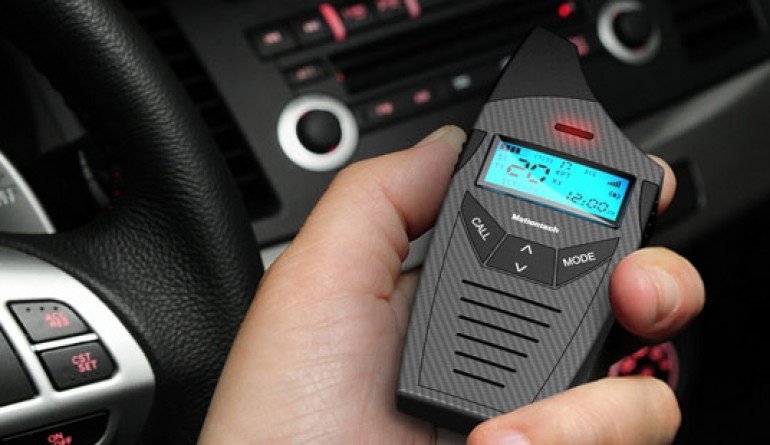
Growth in number of license-free equipment
Due to the rapid developments in the telecommunication sector, the number of applications considered unlicensed has grown significantly. This mainly concerns radio transmitters that in principle is intended for bridging signals over short distances and which also have low capacity.
Equipment with a licensing requirement
It should be noted that there are numerous companies in Curaçao that trade in broadcasting systems that use frequencies that are not permitted in Curaçao and/or broadcasting systems that require licensing for these to be installed, to have such present, to use or to operate such. This concerns devices varying from wireless telephones (including “DECT 6” telephones), surveillance cameras and intercom systems to baby-phones and wireless “Access Point” routers, etc. all of which are characterized by such an extent of broadcasting capacity that a license is required. This licensing requirement is laid down by law in article 15, paragraph 1 of the National Ordinance on Telecommunication Facilities (Official Gazette 2011, no. 37).
Exceptions for the licensing requirement
There are exceptions for the licensing requirement as referred to. Under certain conditions it is permitted to import and trade in broadcasting systems without a license being required for this (license-free). These conditions have been set out in the Ministerial regulation exemption telecommunications license 2015 (Official Gazette 2015. no. 3).
In this regulation, the following matters are further specified:
- the designated categories of broadcasting systems for which no license is required;
- the frequencies that these designated categories of broadcasting systems are permitted to use;
- the prescriptions that are applicable to the use of the designated broadcasting systems and corresponding frequencies.
The ministerial regulation provides a clear distinction of which equipment may be used or traded freely. Besides this, there is a basic requirement that the equipment must comply with the prescriptions as adopted in:
National Resolution Peripheral Equipment, Download Official Gazette 1995, no. 224
National Resolution Radio Installations, Download Official Gazette 1998, no. 18
Prescriptions license-free equipment
The prescriptions that apply for license-free equipment comprise the following starting principles:
- The equipment must be of such nature that its application and its technical construction are not likely to cause any or hardly any disturbance or obstruction in transmission systems, receiver systems and other electrical or electronic systems. Such is also laid down in article 48, paragraph 1 of the National Ordinance Radio Installations.
- The equipment may only use frequencies that have been designated by the minister and are specified in the regulations. For some categories of broadcasting systems that are distinguished in the regulations, these frequencies, where necessary, have been processed in tables together with other specific prescriptions, which have been added as an annex to the ministerial regulations. This is also included in article 48, paragraph 2 of the National Resolution Radio Installations.
- Frequency bands designated by the minister for the use of license-free equipment are mostly shared by multiple users. This implies that the users are not protected from disturbances and other obstructions caused by other users of license-free equipment. Such is contrary to users of equipment for which a license is required. These users are protected against this.
Violations
Users or traders in radio broadcasting systems are usually advised to properly comply with the conditions and prescriptions. Cases where, following inspection by BT&P, it becomes apparent that the equipment does not comply with the conditions, will result in the use or trade immediately being ceased or even the equipment being taken into custody. This will protect other users from equipment interferences they may encounter caused by equipment that does not comply with the conditions.
Within this scope, BT&P started the inspection of companies trading in radio broadcasting systems.
This inspection of these companies is still ongoing.
(BT&P Publication period: 2015)
Related Publications

Tariffs electricity and water as of 1 May 2022

Feed-in tariffs for sustainably generated electricity 2026
